
Intelligent Document Processing (IDP) Software
Automating and scaling a tedious manual quality control process
The Problem
Ryan's Property Tax Data Quality Control (QC) process relied heavily on manual validation, fragmented workflows, and legacy tools that struggled to keep pace with growing data volumes. Quality reviewers faced frequent data discrepancies caused by automation failures, repetitive manual data entry, and limited visibility into errors across multiple systems. These challenges increased the risk of inaccuracies, slowed report generation, and extended onboarding time for new team members.
With a small team responsible for validating large amounts of property tax data and supporting documentation, existing processes could not reliably achieve full data verification. The lack of automated error detection, comprehensive reporting, and end-to-end validation capabilities made it difficult to scale operations while maintaining quality standards.
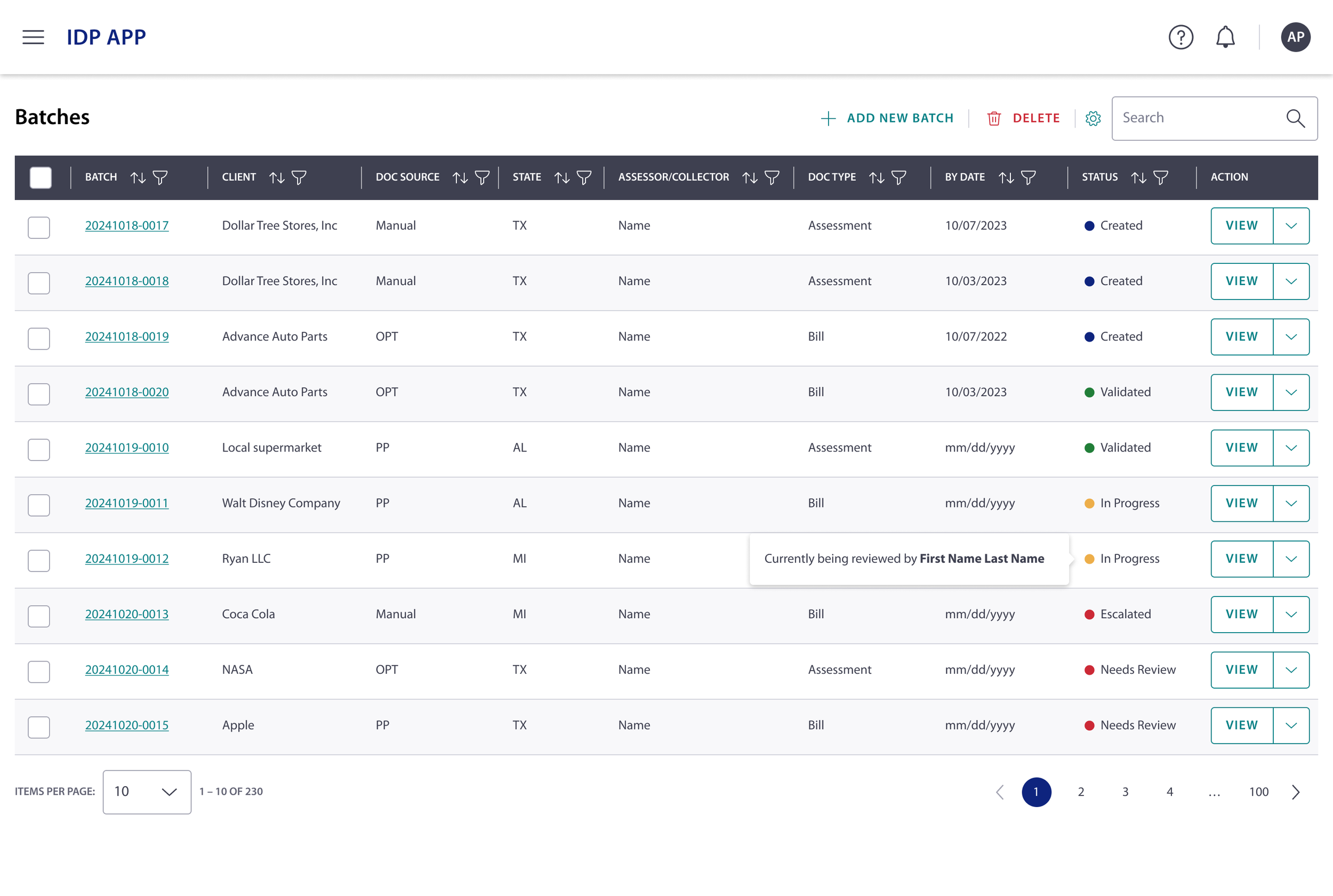
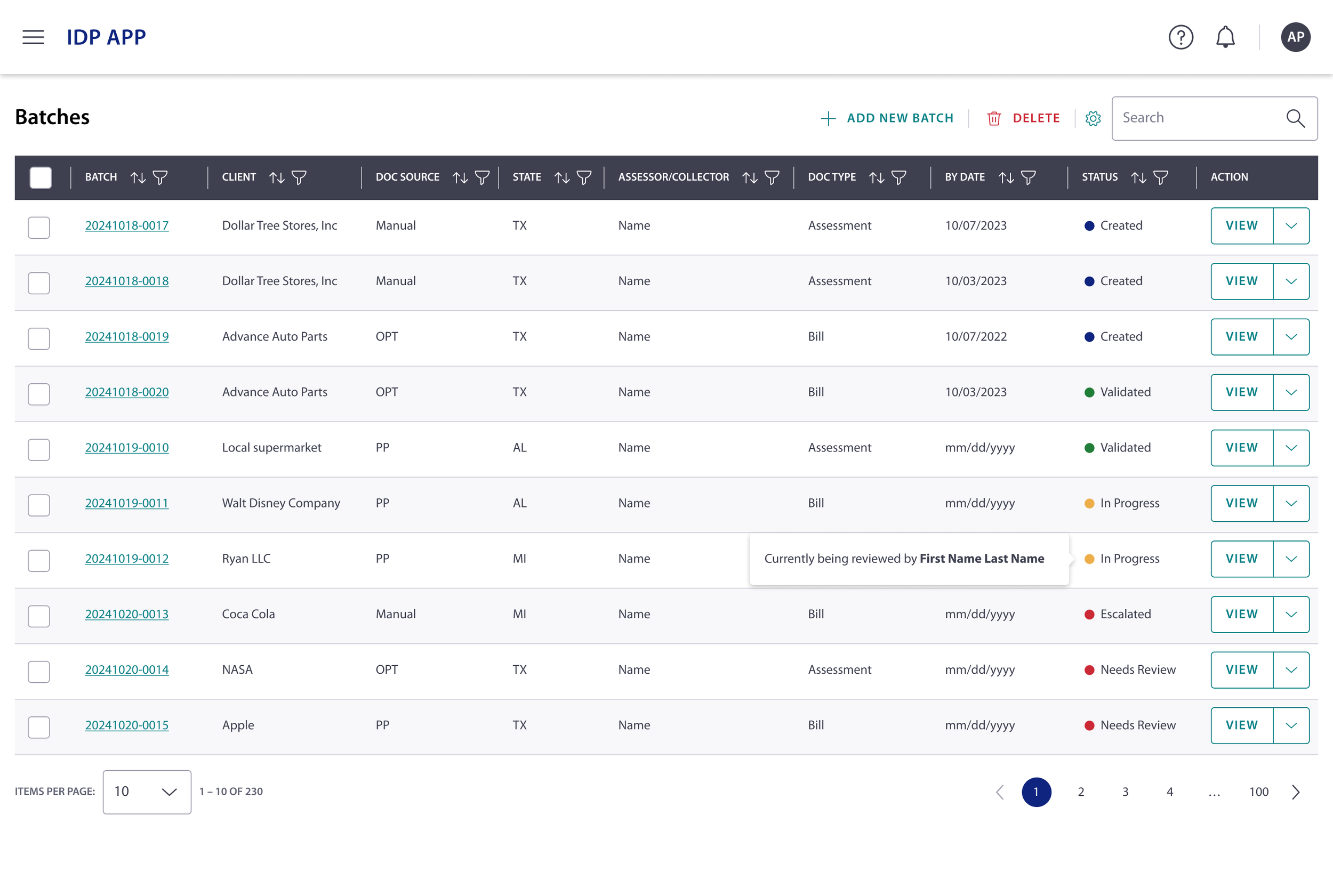
The opportunity was to design an intelligent QC platform that streamlined validation workflows, integrated with existing data sources, and automated error detection. By enabling 100% data and document validation, the solution aimed to improve accuracy, reduce manual effort, accelerate reporting, and empower the team to handle significantly higher workloads without increasing headcount.
Solution
sfbgfnhgdgbnsfhnlgbsd
User Flow
Research: (focus on a few key outcomes from the research and what it affected)
Initial Research
Round 1 validation
Round 2 Validation
Round 3 - Expansion Research
Screens/screen flow
Design decisions
Time vs. needs - balancing needs for MVP versus user needs
App outcomes
Team Members:
Product Owner: Kim Stradtmann
Lead Developer: Veller Bauer
Tools:
Figma, Maze, Lucid, Balsamiq
My Role:
I am the only UX designer and researcher for the IDP app from the initial research and development through implementation and feature expansion. I collaborated with a distributed cross functional team across the US, Brazil, and India.
Product Design
UX Research
Information Architecture
Prototype Development
Methods:
A/B testing, user interviews, wireframing, low to high fidelity prototyping and testing, mapping the information architecture, rapid iteration in an agile environment
“postitive feedback from Kim”